Chapter 02 · The base
Sushi Rice Is Made First, and It Decides the Rest
Everything a diner notices about a piece of nigiri happens on top. Almost everything that can go wrong with it happens underneath, in the twenty minutes before the fish is ever touched.
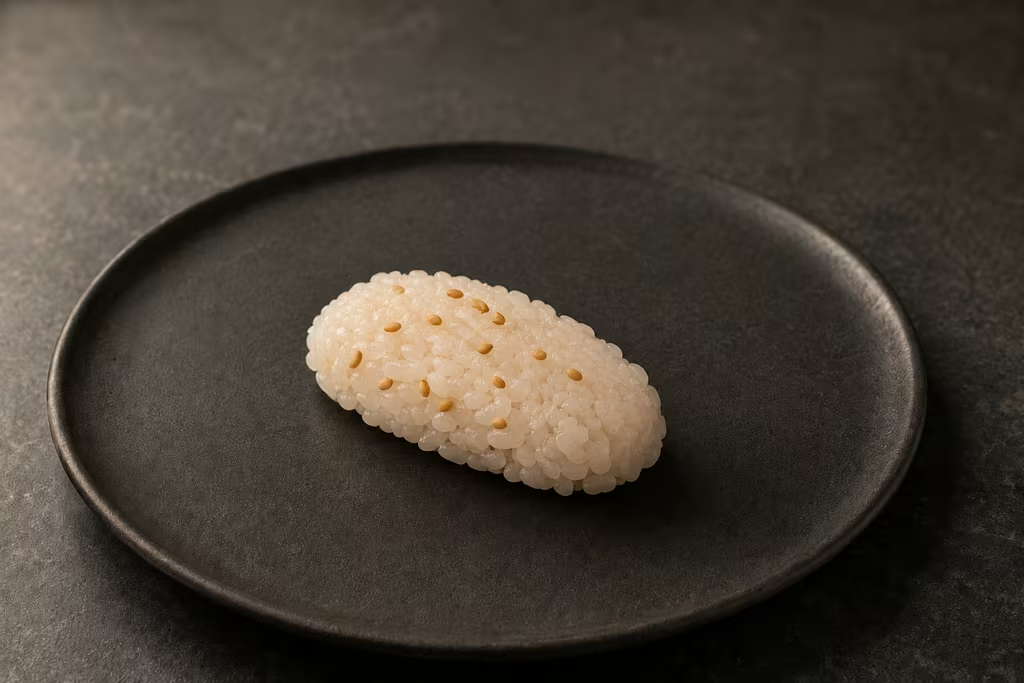
The grain
Short-Grain Japonica, Cooked Firmer Than Table Rice
Sushi rice starts as short-grain japonica, a variety high in the starch that makes cooked grains cling without dissolving. It is rinsed until the water runs clear, which removes loose surface starch that would otherwise turn the batch pasty, and then cooked with slightly less water than the same rice would take as a side dish. Firmer is deliberate: the grains still have to absorb the seasoning that comes next.
Long-grain rice cannot be substituted, and not for reasons of authenticity. Its starch profile leaves the grains separate and dry, so a formed base has nothing holding it together and falls apart the moment it is lifted. A piece of nigiri is a structure, and the rice is the only structural component in it.
The dressing
The Seasoning Goes On Hot
The dressing is rice vinegar, sugar and salt, in a working ratio somewhere near ten parts to five to one by volume, moved around by taste and by season rather than fixed by rule. It goes onto the rice while the rice is still hot enough to take it — a warm grain absorbs the liquid, a cold grain is coated by it, and the difference is the whole point. Dressing cold rice produces something that tastes of vinegar on the outside and of nothing inside.
The mixing is done with a cutting motion rather than a stirring one, usually with a flat paddle, and usually while fanning the batch to drive off surface moisture. Both habits exist to solve the same problem: get the liquid distributed without crushing anything. Every stir that drags a grain against another grain is damage that cannot be undone later.
The temperature
Held Warm, Never Refrigerated
Seasoned rice, shari, is then held warm through a service. Body temperature is the figure most counters work towards, and it is why a piece taken out of a refrigerated display reads flat: cold rice is firmer, less aromatic, and its vinegar edge disappears almost entirely. Reheating does not bring it back, because the aroma that went missing left with the steam.
This is also the honest reason supermarket sushi tastes the way it does. Pre-packed pieces are refrigerated for food-safety reasons that are not negotiable, and the rice pays for it. Nothing in the recipe is different; the temperature is, and on this dish temperature is an ingredient.
The path
Rice as a Temperature, Not a Recipe
Five stages, plotted by the one variable that decides the outcome. The zone at the bottom is drawn as a zone rather than a step because it is a place the rice must never go.
The forming
One Press, and Not a Second One
Fifteen to twenty grams goes into one piece, formed with just enough pressure to hold its shape when lifted. The hand shapes it against itself in two or three movements and stops. Press harder, or press again, and the grains stop being separate — the walls break, the starch inside comes out, and the base turns into something with the texture of dough.
That failure is the one that cannot be corrected. Under-seasoned rice can be fixed on the next batch, cold rice can be made again, but over-worked rice is finished, because the damage is physical. It is the reason a beginner making sushi at home produces something dense and uneven while using exactly the right ingredients in exactly the right amounts.
The tub
Why the Rice Is Dressed in Wood
The vessel is part of the method. Cooked rice is turned out into a hangiri, a shallow cypress tub, and dressed there rather than in the pan it was cooked in. Wide and unlined, it lets steam leave from a large surface at once, so the rice cools quickly and evenly instead of sweating under itself; unfinished wood also takes up a little of the excess moisture, which a metal bowl simply returns to the grains.
The motion in the tub matters as much as the tub. The vinegar dressing is folded through with a flat paddle held on its edge and used to slice the mass apart rather than stir it, while the rice is fanned to carry the steam away. Stirring would burst the grains and the batch would turn to paste. Done properly the whole operation takes a couple of minutes and ends with rice that is glossy, still hot, and made of grains that are still separate — which is the only state it can be formed from.
Still asked
Questions About Sushi Rice
Can ordinary rice be used for sushi?
Not usefully. Short-grain japonica clings because of its starch profile; long-grain varieties stay separate and dry, so a formed base has nothing holding it together. The rice is the structural part of the piece, and that job needs that grain.
Why is the vinegar added while the rice is hot?
Because a hot grain absorbs the dressing and a cold one is merely coated by it. Seasoning cold rice gives you vinegar on the surface and plain rice underneath.
What is the ratio of vinegar, sugar and salt?
A common working point is around ten parts vinegar to five sugar to one salt by volume, and almost nobody stays exactly there. It is moved for the season, for the fish it will sit under, and for the taste of the person making it.
Should sushi rice be served warm?
At a counter, yes — near body temperature. It is one of the clearest differences between a piece made to order and one taken out of a chiller, and it affects aroma more than it affects texture.
Why does homemade sushi rice turn out sticky and dense?
Almost always over-working: too much stirring while dressing, or too much pressure while forming. Both break the grain walls and release the starch inside, and neither can be undone once it has happened.
Read next
The Cut and the Seasoning That Follow
The cut
Cutting Salmon for Nigiri: Angle, Thickness and the Grain
Why the blade crosses the muscle, and what a second pass costs.
One draw of the blade
The seasoning
Real Wasabi vs the Green Paste
Why it is hidden underneath, and how to tell which one you are served.
A dab you never see