Chapter 04 · The hidden layer
The Wasabi You Cannot See, and Usually Are Not Eating
It is the smallest component of a piece of nigiri, the only one with a fixed position rather than a quantity, and the one most likely not to be what its name says.
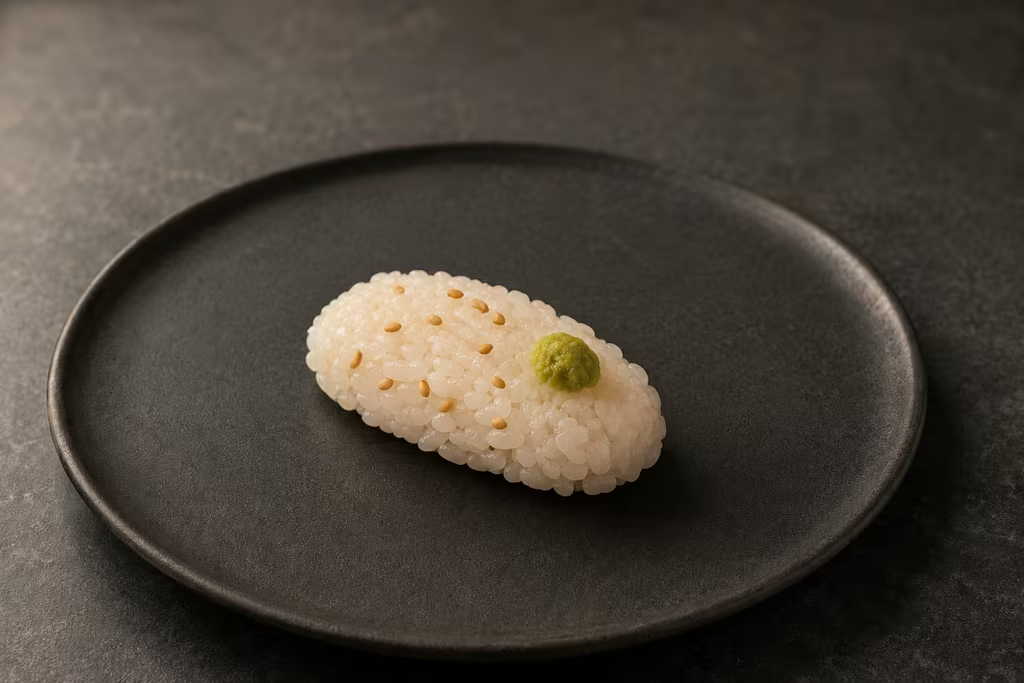
The plant
Wasabia Japonica Is Difficult, Slow and Expensive
Real wasabi is the rhizome of Wasabia japonica, a plant that grows in cool running water, takes a year and a half or more to reach usable size, and resists cultivation almost everywhere outside the conditions it evolved in. The supply is small and the price follows, which is the whole explanation for what is served instead.
What most sushi arrives with is horseradish, mustard and green colouring, sometimes with a token percentage of real wasabi in the mix. It is not a scandal so much as an economic default, and it is detectable without any expertise: the substitute goes for the sinuses and vanishes in seconds, while the real thing lands on the tongue as a sweeter, greener heat that fades more slowly.
The chemistry
Why It Fades So Fast
The heat is not in the root as it sits. It is created when the cells are broken and an enzyme meets a compound that was stored separately, producing the volatile isothiocyanates that reach the nose. Volatile is the operative word: they leave. That is why the flavour peaks minutes after grating and why a tube keeps its bite only by using a different, more stable chemistry.
It also explains the traditional grater. A sharkskin surface tears the cells rather than slicing them, which releases more of the reaction in one pass, and the paste is gathered into a small mound that limits how much surface is exposed to the air while it waits.
Why minutes matter
What Fades, and What Never Reacted
The vertical axis carries no numbers on purpose. The claim above is qualitative — created on grating, gone within minutes — and putting percentages on that would be inventing data to decorate a curve.
The position
Under the Fish, Not On Top of It
Between the rice and the fish goes a dab about the volume of a single grain of rice. The position is functional rather than traditional. Placed on top it would be the first thing tasted, alone, and the first thing wiped off; underneath the slice it seasons the piece from inside, and its moisture helps the fish grip the base instead of sliding off it.
This is also why a piece made properly needs nothing added at the table. The seasoning is already inside it, and soy sauce applied to the rice side is absorbed immediately, taking the structure of the base with it. Where soy sauce is used at all, the fish side is what touches it.
How to tell
Reading the Difference at a Counter
Colour is the weakest signal, because both can be the same green. Texture is better: freshly grated wasabi is slightly fibrous and never perfectly smooth, while the substitute is uniform, because it was made in a factory. Behaviour is best — real wasabi is sweet before it is hot, and its heat arrives on the tongue and recedes; the horseradish version arrives in the nose and disappears.
A counter that grates its own will usually do it in front of you, and will not put a mound of it on the plate for dipping. The mound is itself a tell: it exists so the diner can add heat, which is a different service model from a piece that was seasoned before it was handed over.
The growers
Where the Real Plant Is Actually Grown
Wasabia japonica is grown in running water rather than in soil, in graded beds fed by cold spring water that never stops moving. The best-known of them are in Shizuoka, on the Izu peninsula, where the terraced beds have been recognised as a globally important agricultural heritage system; Nagano and Iwate grow it as well, and a smaller quantity is raised in gravel beds under shade rather than in water. The plant wants clean water at around twelve degrees and takes the better part of two years to reach a saleable rhizome, which is most of the explanation for the price.
A handful of growers outside Japan supply it fresh, and the conditions they need are the same ones that suit watercress: southern England, parts of the Pacific Northwest, New Zealand. Their output is small and goes almost entirely to restaurants, which is why a supermarket carries wasabi paste and no fresh rhizome at all. Anyone wanting to taste the real thing is generally choosing where to eat rather than what to buy.
Still asked
Questions About Wasabi
Is the wasabi in most restaurants real?
Usually not. Outside Japan the green paste is generally horseradish, mustard and colouring, sometimes containing a small proportion of real wasabi. Places that serve the real thing tend to say so, because it costs them noticeably more.
How can I tell real wasabi from the substitute?
By where the heat goes. Real wasabi is sweet first and warms the tongue, then fades; the horseradish mixture hits the sinuses and disappears within seconds. Texture helps too — the real thing is slightly fibrous rather than perfectly smooth.
Why is wasabi put under the fish?
So it seasons from inside and adds grip between the slice and the rice, and so it cannot be brushed off. On top it would be tasted on its own and mostly lost.
Why does real wasabi lose its heat so quickly?
Because the heat is produced by a reaction that starts when the cells are torn, and the compounds it produces are volatile. They begin leaving within about fifteen minutes, which is why the root is grated to order and never in advance.
Should I mix wasabi into soy sauce?
It is common and it is not how a seasoned piece is meant to be eaten. The wasabi is already inside the piece, and dipping the rice side in soy sauce breaks the base down. If a mound is provided, a little on the fish is the least destructive option.
Read next
The Two Parts the Wasabi Sits Between
The anatomy
What Goes Into a Piece of Salmon Nigiri
Four parts, one order, and the reason the order cannot be changed.
The whole piece
The base
Sushi Rice Is Made First, and It Decides the Rest
Seasoned hot, held warm, pressed once — and the failure that cannot be undone.
Twenty minutes before the fish